The beauty of truly being in it— visually, spatially, physiologically.
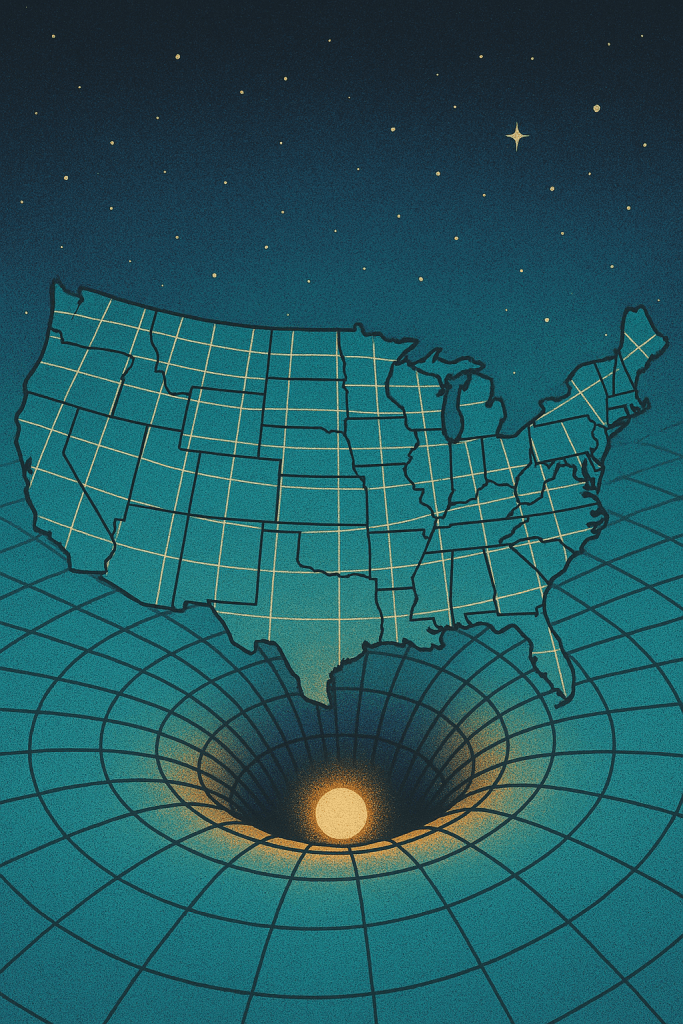
You’re an agent on an endless map. And you’re there. Wherever you are.
And you have objectives. And stops. You, my friend, are on the greatest adventure.
And it need not be extraordinary— but it must be immersive. Fully immersive.
Always on the edge of potential. What’s next. Venturing into the unknown for the sake of knowing.
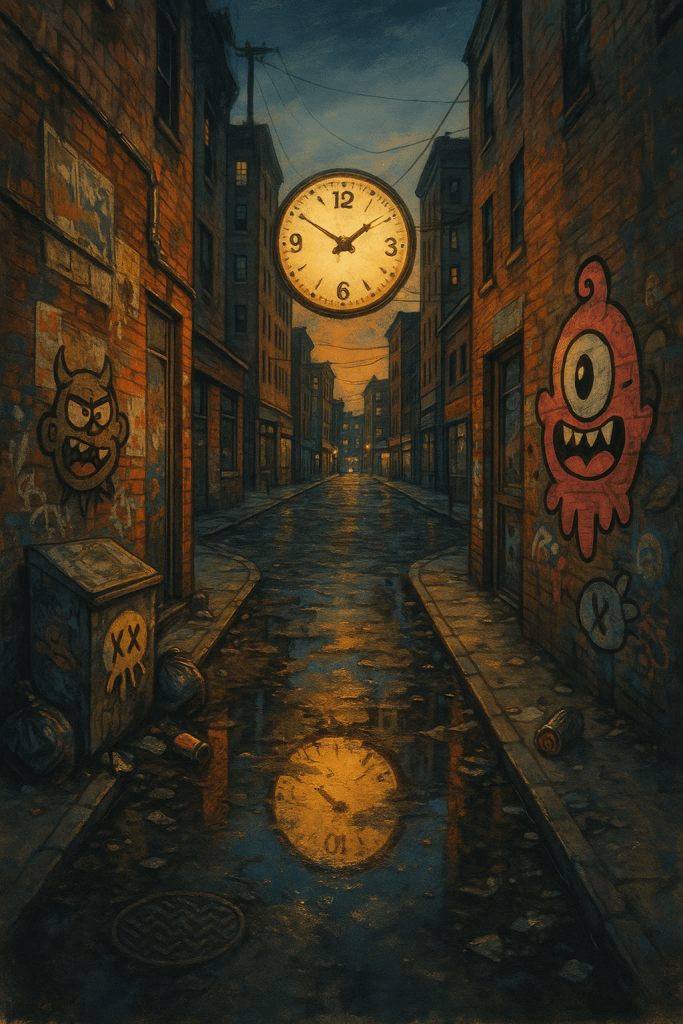
The hidden alleys. The forgotten streets. But also the nooks and crannies, and the glazed-over details of the main thoroughfares.
The world is yours to explore.
Within it—the ability to create. Whatever you’d like. Build your own mosaic— of music, of pace, of objective, of waypoints— and be the vessel that creates.
Zen and the Art of Motorcycle Maintenance touched on this. Robert Pirsig wrote that riding a motorcycle allows you to interface with the world in a more meaningful way— unlike being sealed behind the steel curtain of a car.
I feel the same about running and cycling. They allow you to meet the world— not just pass through it.
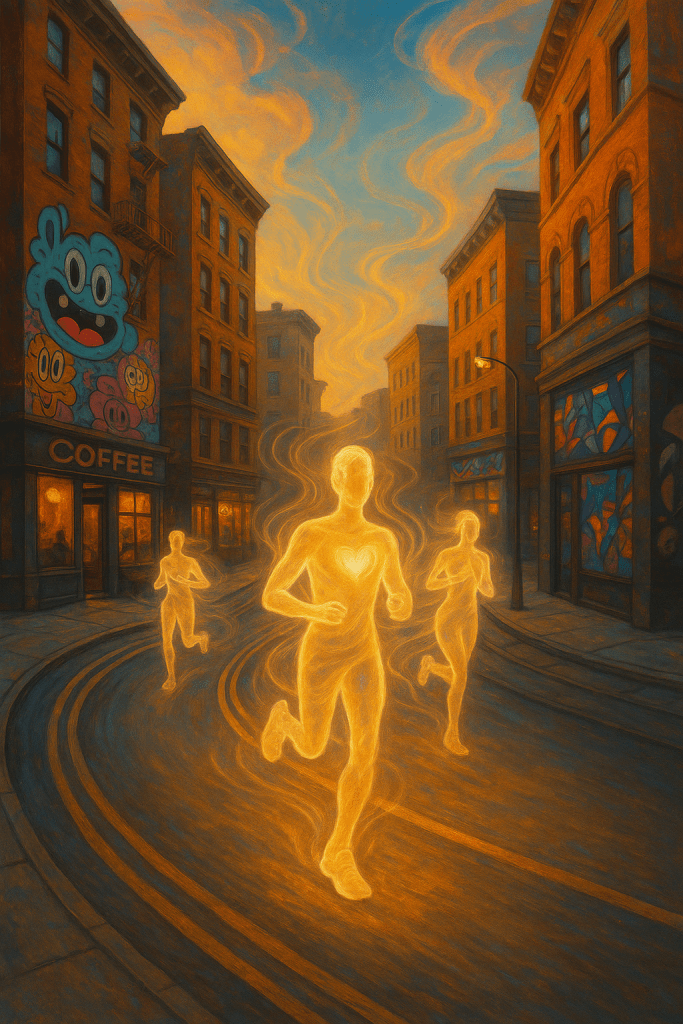
Running, even more than cycling, is intimate. You’re unarmored. Approachable. There’s no dismounting. No worry about a bike being stolen. You can hop into a store, a museum, a coffee shop— fluidly, freely, without breaking stride.
And if you’re lucky, you’re in that runner’s high— a state that opens you up to the world in new ways. A state that lends itself to kindness, to gratitude, to compassion, to an openness to experience.
This, to me, is what defines adventure running. Especially in cities.
Always lead with your curiosity. Be cautious, yes—but never let that override the pull.
Curiosity will lead you into uncharted territory. Satiate your wanting. But can leave you rudderless.
It’s what drives you to jump the rickety fence, to chase the side street no one marks on a global heat map. It leads you passing yards with poorly chained Dobermans, to corner stores thick with teenagers’ stares, past police memorials and shattered glass.
But then— curiosity satiates. The hunger fades.
You search for your escape. You’re back to safety. You’re in, and you’re out.
Curiosity is a bit of a drug. It delivers the rush. It lets you walk the razor’s edge.
Still, no matter what— always follow your curiosity.
I was inspired to try something new today. For whatever reason, the thought of Monet— painting the same scene over and over, at different points in the day, capturing shifting light and mood— struck something in me.
So I followed suit.
I ran the same one-mile loop. Ten times. All throughout the day.
Each loop was the same on paper— but entirely different in experience.
Early morning. Afternoon. Evening. Caffeinated. Fasted. A little nicotine. Music. No music. Stress from work. Moments of rare clarity.
There were different smells in the air. Different textures to the sky: Overcast. Drizzle. Sun. Warmth.
And each pass, though identical in path, revealed something new— a shifting perspective, a stirring undercurrent, a unique mood inked into motion.
Each mile became a brushstroke. Each loop, a layer.
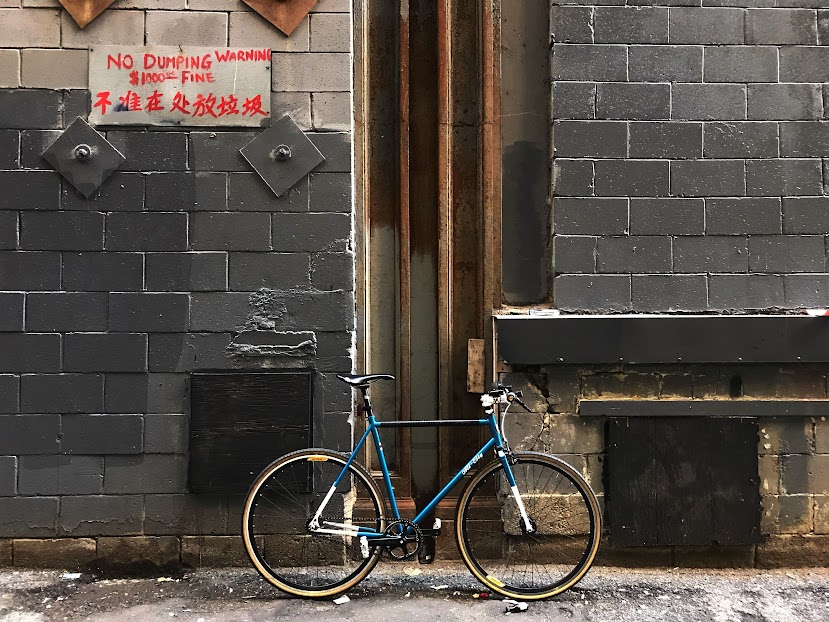
There’s no doubt that fixed-gear cycling was the spark behind my love for cities—or at the very least, a major contributing force. Especially New York City. Monstertrack. Fixed culture. Alleycats and the like.
It bred a dark, gritty endurance underworld that I found utterly captivating.
Riding fixed defined my early twenties and stretched well into my early thirties — until a few too many close calls in Boston made it clear: My love for adrenaline, the pull of the fixed cog, and the hypnotic flow of weaving through traffic — It was going to kill me.
And just like that, the All-City Big Block was retired.
But what I’ve found since is that urban running has come to fill that space in an unexpected way. It has scratched the same itch: that mix of endurance and adrenaline and exploration. It’s meshed the two in a way that feels far safer— no helmet required.
And yet, elements of the fixed-gear mentality still trickle into my city runs: The exploration. The adventure. The quiet thrill of going where you shouldn’t. The endless permutations of streets and avenues.
Of slipping past boundaries—trespassing, perhaps—just enough to feel alive. Venturing through infrastructure not designed for a cyclist or a runner
So as I ride this commute on my non-fixed gear bike, I pay tribute: To the fixed-gear bicycle. And to urban running— its quieter, sneakier descendant.
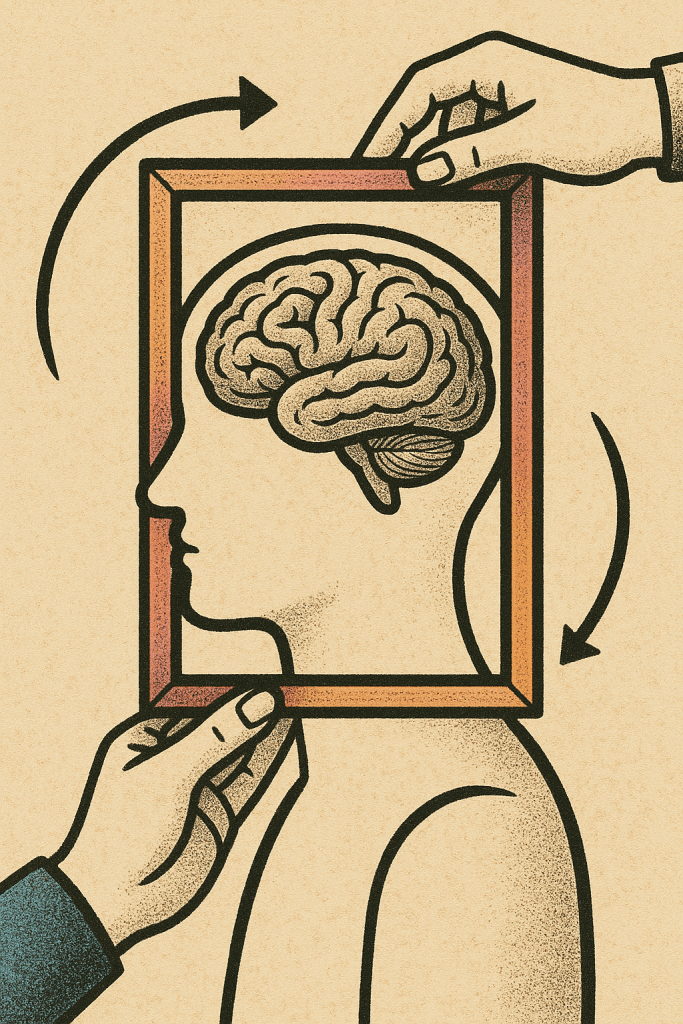
There’s something curious about reframing— a shift from the run to the adventure, a shift from an objective— “working out” or “exercise”— to present experience.
But this takes mental overhead. You’re working with, even manipulating, a difficult state: tunnel vision.
In most endurance pursuits, tunnel vision dominates. The mind narrows. The body bears down. Thinking becomes hard. The voice in your head isn’t always on your side. Processing? Even harder.
But the adventure pace invites something else. It’s about widening the frame.
It’s about the noticing. The conversational pace: speaking. No, articulating. And visually painting the environment with your attention.
And this is no easy feat in a state of physical and mental endurance. Your body wants to close off, conserve, but the adventure asks you to override that. To pay attention.
To notice the way the sidewalk curves. To remember a left turn: “North on Main, right on Ferry, then north on Virginia.” To navigate without GPS—projecting a mental map in your mind’s eye and making calculations. To hold shapes, colors, shadows in memory— all while your blood flows to muscle, not mind.
That’s the real beauty of it: The adventure is both mental and physical. A layered, living awareness. A discipline of attention, even when the body is strained.
The theme here is the destination run—the magnetic pull of point B. Something uniquely profound unfolds when movement is intentional, when there is purpose behind the path—from point A to point B. The constraint of having a fixed endpoint gives rise to unexpected, uncharted tracks.
It forces you through what might otherwise be dismissed as mundane, and in that, lies the responsibility: to find beauty, to uncover uniqueness, to capture the overlooked.
Movement, paired with your current physical state—elevated, enduring—blends with music, with caffeine, maybe even with other substances or sensations. And suddenly, even a back road in your own city becomes novel. Novelty creates a mosaic of experience.
You might just be running to pick up groceries. Or heading to retrieve a rental car. But the journey transforms that simple errand into something else entirely—into art.
And if it is a grocery run, then the destination holds its own reward. The payload. You feel it. You carry it. You return with it. And when you finally sit and enjoy that meal or moment—you feel like you earned it.


 Adventure Pace Running